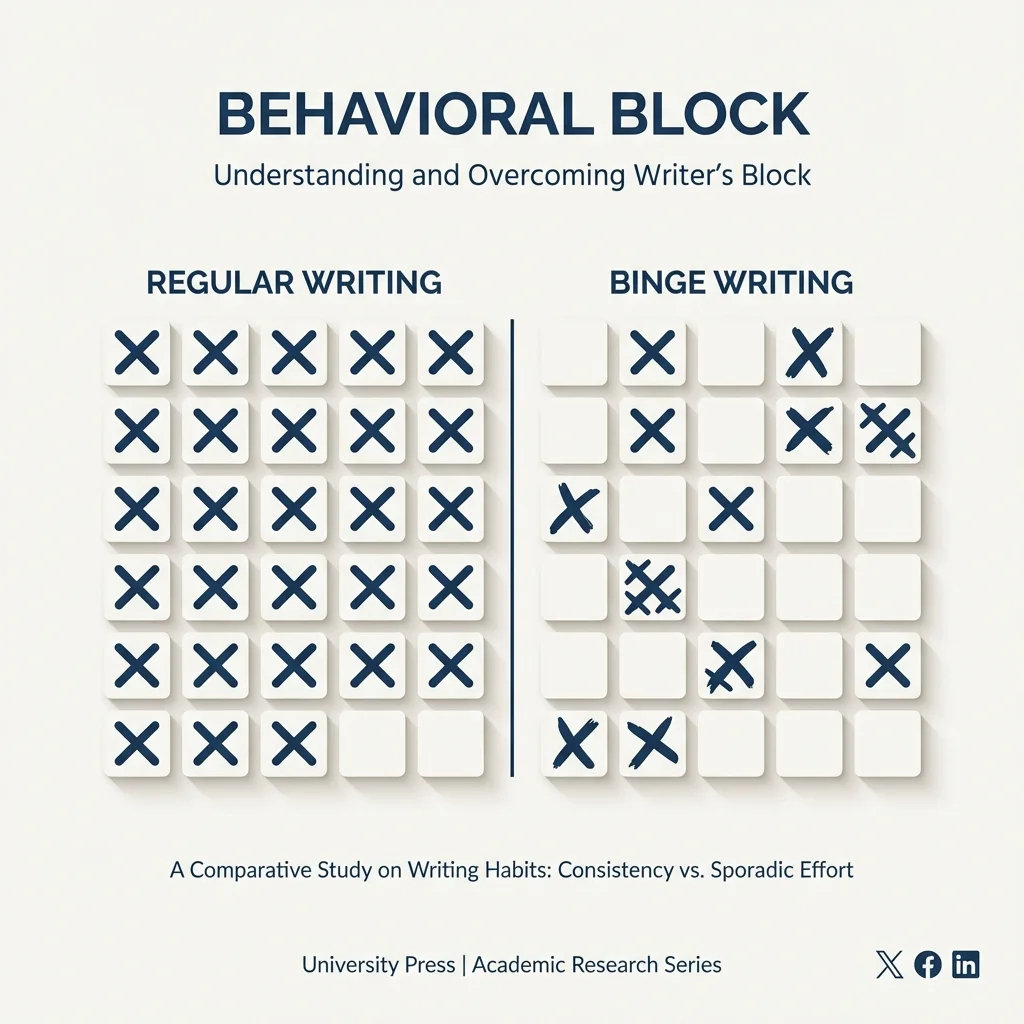
The top 3-5% of writers produce 2-4x more output. They use systems, not talent. Behavioral block is not about drive or skill. It means we lack the routines that make writing happen.
First, Rule Out Other Blocks
Three questions help us check:
- Do we have energy? If not, it may be a physiological block.
- What does our pattern look like? Bursts, not steady sessions, suggest a behavioral issue.
- What stops us? Fear may signal a motivational block. Trouble sitting down? See writer's block vs. procrastination.
Behavioral block means we can write and want to write. But we lack the systems to make it happen.
What Top Writers Do
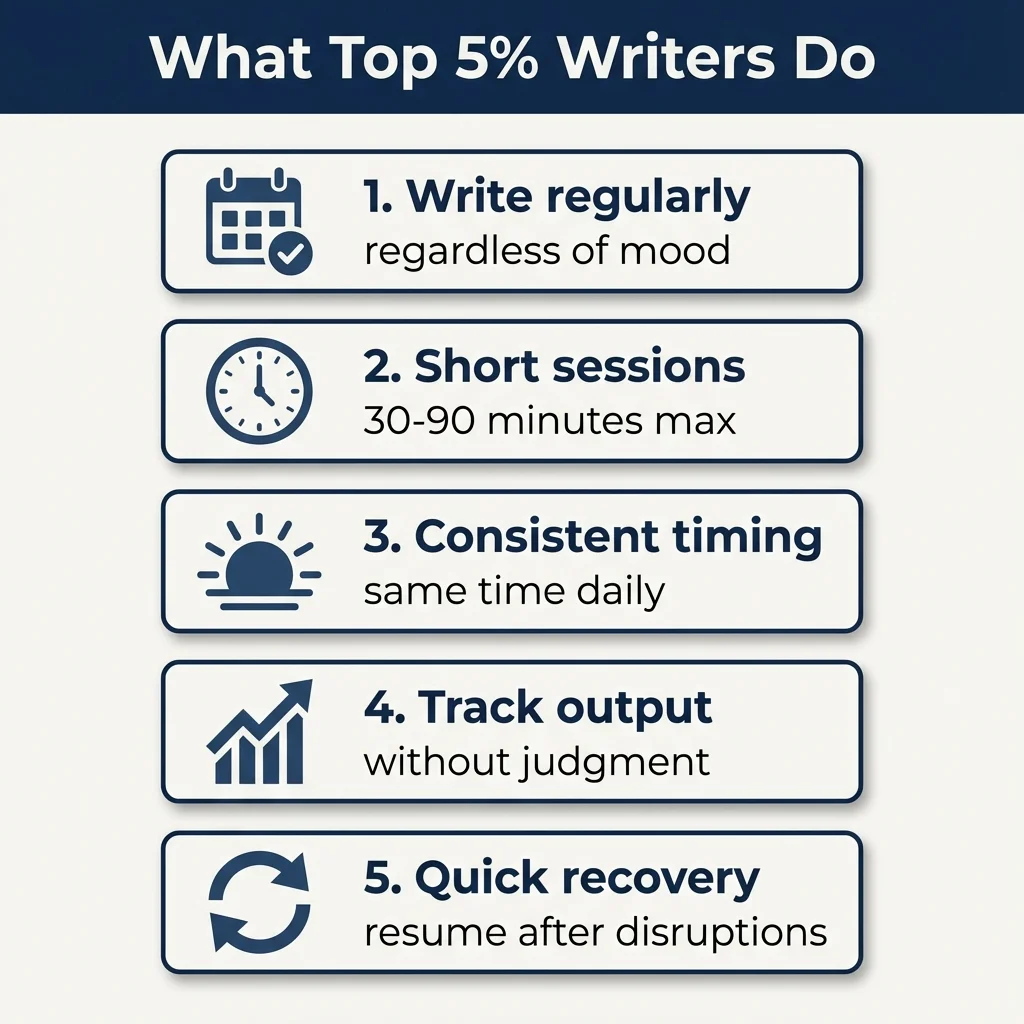
Studies on high-output writers show clear patterns:
- Write on a steady basis, not just often
- Keep sessions short (30-90 minutes max)
- Write no matter their mood
- Track output to spot trends
Boice, R. (1990). Professors as Writers
Top writers made writing automatic. They used set times and places, not willpower.
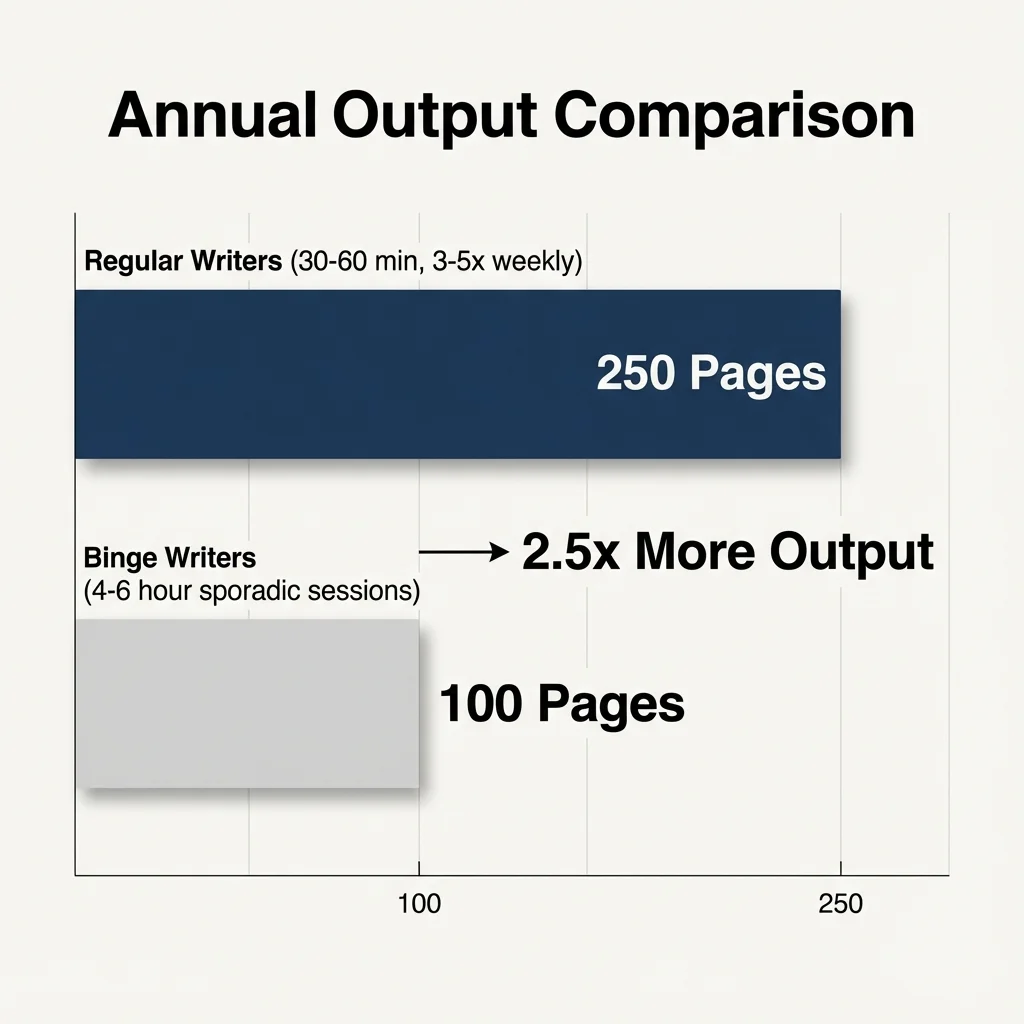
Why Steady Beats Binge: 12-Month Data
The data is clear:
- Steady writers (30-60 min, 3-5x a week): about 250 pages per year
- Binge writers (4-6 hour blocks): about 100 pages per year
Steady writers produce 2.5x more, with better quality. Here is why:
- The project stays in mind: We pick up where we left off with ease
- Our brain works between sessions: Ideas grow in the background
- Peak quality is early: Hours 1-2 are best. After that, returns drop.
Evidence-Based Interventions
Tier 1: Best Evidence
1. Set a Fixed Schedule
This is the top fix. It makes writing automatic. We stop choosing each day. For a full guide, see how to build a writing routine that sticks.
- Block 3 set times each week
- Start with 30-minute sessions
- Use the same spot each time
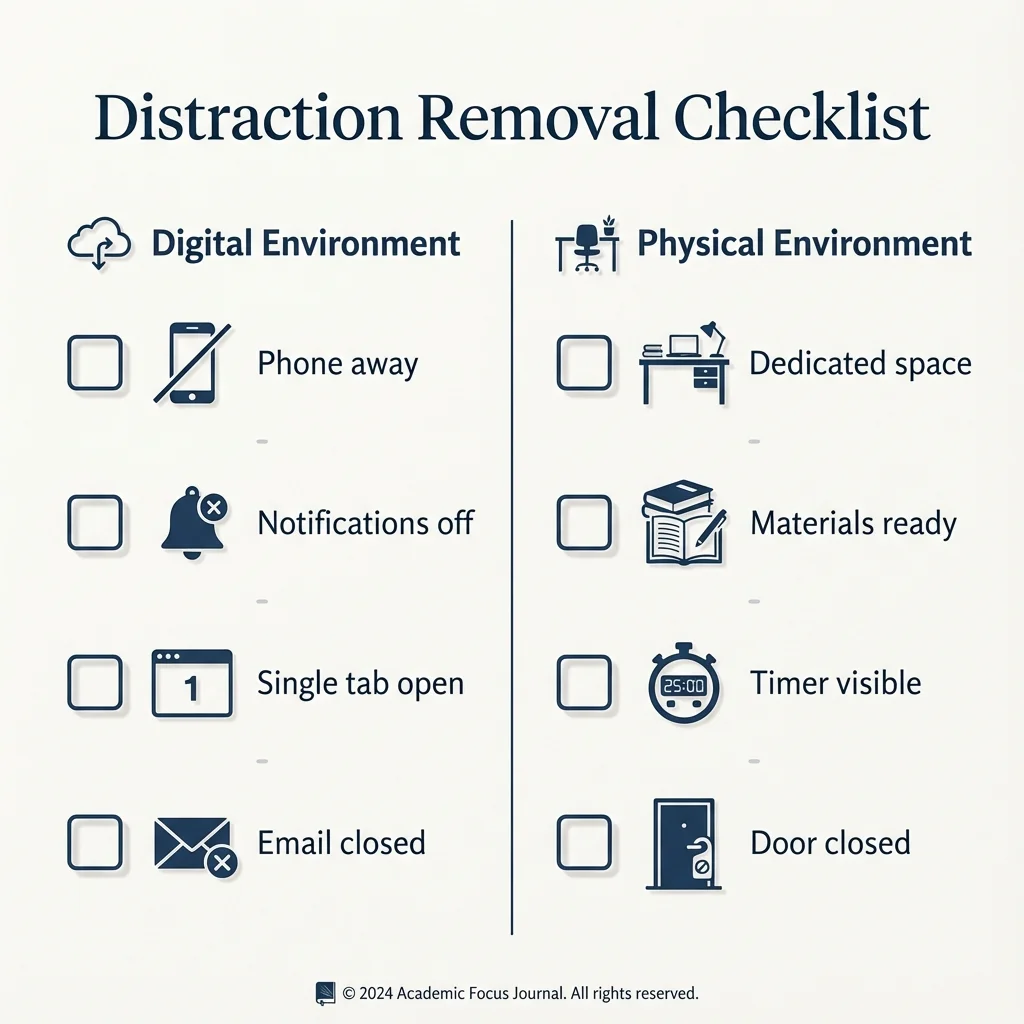
2. Cut Out Distractions
Each tab switch hurts our focus. Quality drops 20-30%.
- Digital: Close tabs, close email, put the phone away, turn off alerts
- Physical: Close the door, set limits with others
3. Track Sessions
Tracking shows us our patterns. Most writers don't see their habits until they log them. The data alone helps us change.
- Basic tracking: Date, time, how long
- Full tracking: Add word count and what broke our focus
- Time cost: 30 seconds per session
Tier 2: Good Evidence
- Space design: 30-60% gains when we shape our work space
- If-then plans: "If it is Tuesday at 7am, then I write"
Tier 3: Early Evidence
- Habit stacking
- Writing with a partner
- Reward systems
7-Session System Establishment
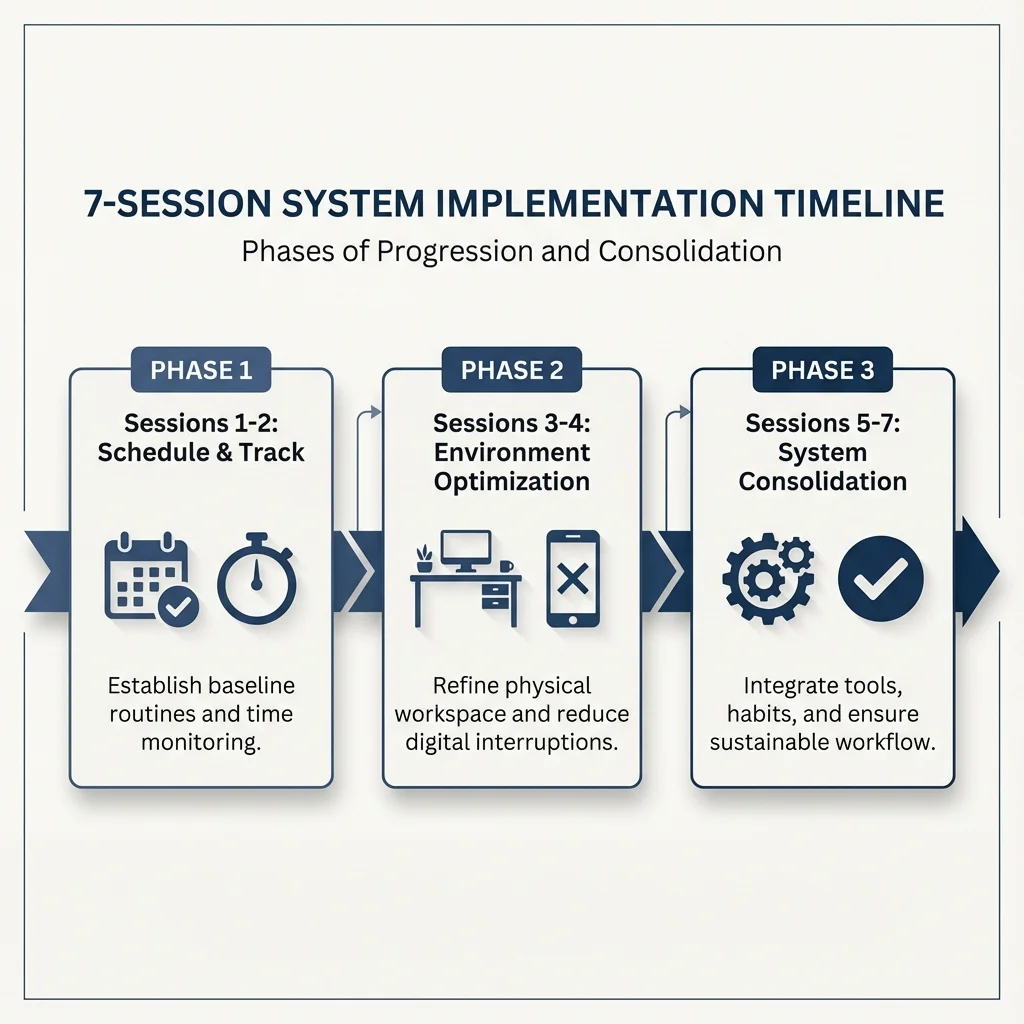
Sessions 1-2: Set Up and Track
- Block 3 days and times on the calendar
- Make a simple tracking sheet
- Do 2-3 first sessions
Sessions 3-4: Fix the Space
- Remove digital distractions one by one
- Pick one writing spot and stick with it
- Add notes on what broke our focus
- Compare word counts before and after changes
Sessions 5-7: Lock It In
- Review the data for patterns
- Adjust times based on what works
- Fix repeat problems in the space
- Keep up weekly check-ins
After Session 7
- Keep tracking each week
- Adjust as life changes
- Expect setbacks. Return without guilt.