What Is Physiological Block?
Stress, lack of sleep, or illness drains our brain power. We can't write. But it goes beyond writing. Email, choices, and problem-solving all get hard.
Key sign: All tasks feel tough, not just writing.
Why: Stress hormones hurt the prefrontal cortex. Sleep loss cuts executive function. Illness sends our energy to healing.
Why Stress Kills Writing
What Cortisol Does
- Hurts executive function, working memory, and abstract thought
- Easy tasks still work (like making coffee)
- A bit of stress helps. Lasting stress hurts.
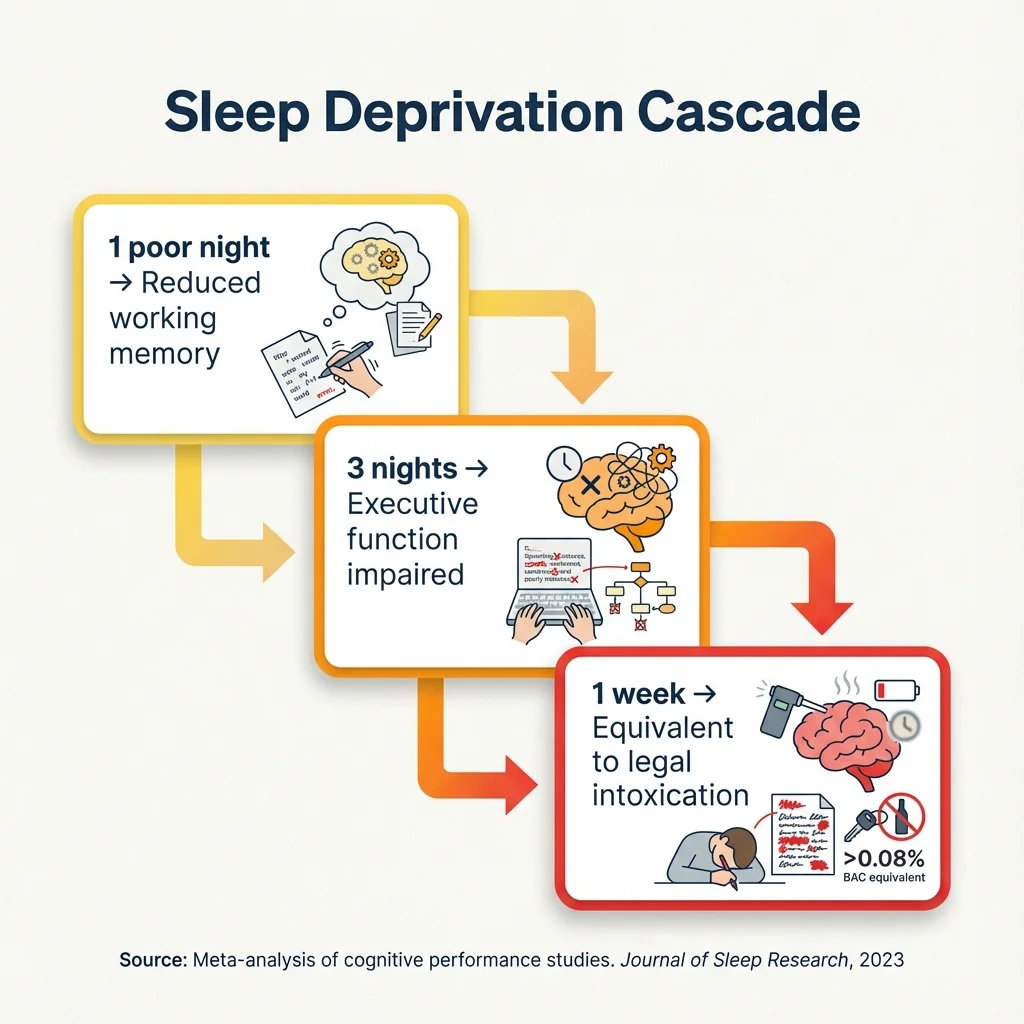
Lost Sleep Adds Up
- One bad night: Working memory drops
- Three nights: Executive function fails
- One week: Think as poorly as if drunk
Writing needs a lot from working memory. When brain power drops, hard tasks fail first. Simple tasks still work.
Stop or Keep Going?
Stop Writing When:
- All hard tasks feel broken
- Less than 6 hours of sleep for 3+ nights
- Stress that lasts more than 2 weeks
- We are sick or healing
Keep Going (With Changes) When:
- Only writing feels hard
- Just one bad night of sleep
- Short-term deadline stress
- Other hard tasks still work
What Works
Tier 1: Strong Proof (Fix the Root Cause)
- Get 7-9 hours a night for 3+ nights in a row
- Big effect on executive function (d = 0.7-0.9)
- REM and deep sleep both matter for healing
- Move: 30 minutes of cardio, 3-5 times a week
- Sit Still: 10-15 minutes of rest per day helps in 2-4 weeks
- Talk to People: Social ties ease stress
- Effect on cortisol: d = 0.5-0.8
See a Doctor: If the block lasts more than 3 weeks, get help. Rule out mood, thyroid, or sleep issues.
Tier 2: Some Proof (Ease the Load)
- Do simpler work (edit, not draft; short lines)
- Write in short bursts (15-20 minutes)
- Find a quiet space. One task. Low stakes.
What Does Not Work
- "Push through": Grit can't beat the body
- More coffee: Hides fatigue. Keeps sleep debt.
- Guilt: Raises cortisol. Makes it worse.
7-Day Recovery Protocol
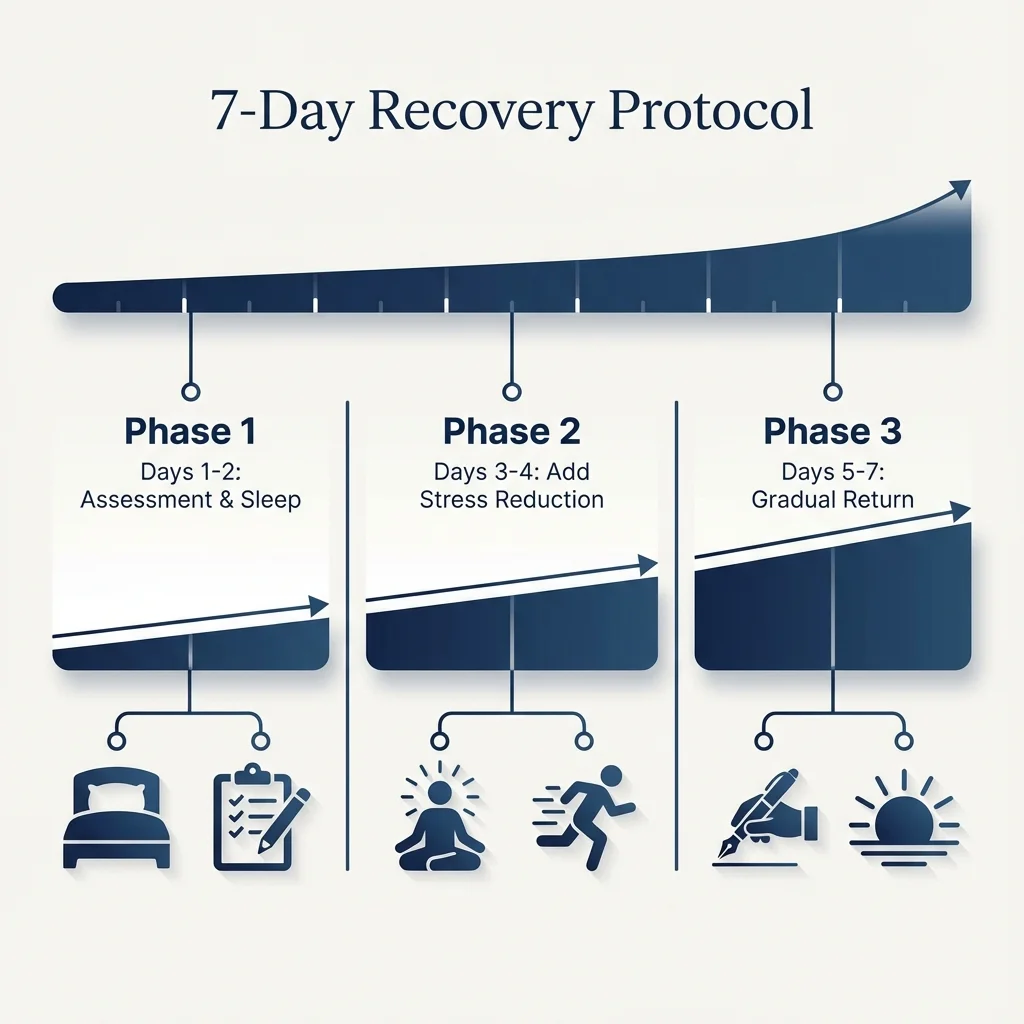
Days 1-2: Check In and Sleep
- Start sleeping more
- Write less or take a full break
- Note how bad it feels
Days 3-4: Add Stress Relief
- Keep tracking sleep
- Add a walk or calm sitting time
- Light editing only, if at all
Days 5-7: Ease Back In
- Check in: Is our head clearer? More energy?
- Try small, low-stakes writing tasks
- Keep up the rest and relief work
This is a body problem, not a will problem. We need rest, not grit. About 7 days brings big gains. Resting now stops long-term brain harm from high cortisol.